What Happens to Players’ Jerseys After Football Matches?
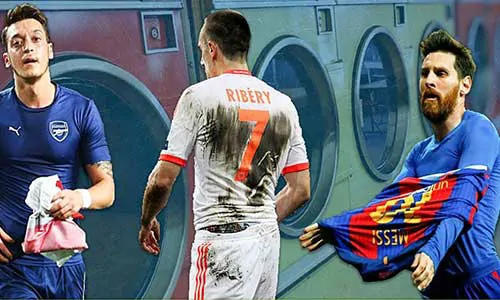
Table of Contents
- 1. Introduction
- 2. What Happens to Players’ Jerseys After Football Matches? The Main Destinations
- 3. The Kit Manager’s Perspective: Behind-the-Scenes Logistics
- 4. Do Clubs Reuse Kits? What Happens to Players’ Jerseys After Football Matches in Lower Leagues
- 5. What Happens to Players’ Jerseys After Football Matches When Fans Ask for Them?
- 6. Elite vs. Lower League Kit Realities
- 7. The Commercial and Collectible Value of Match-Worn Shirts
- 8. Frequently Asked Questions (FAQs)
- 9. Conclusion
1. Introduction
Have you ever wondered what happens to players’ jerseys after football matches? When the final whistle blows and players walk off the pitch, their mud-stained, sweat-soaked shirts begin a fascinating second journey. For millions of fans watching worldwide, these shirts are sacred relics of sporting history. However, for football clubs, they represent a complex mix of tradition, logistics, charity, and commercial opportunity. In this ultimate guide, we will explore exactly what happens to players’ jerseys after football matches, revealing the behind-the-scenes secrets of matchday kits.
Indeed, the fate of a football shirt depends heavily on the level of the competition, the profile of the player, and the specific circumstances of the match. While elite clubs have massive budgets and unlimited wardrobes, smaller teams face a completely different reality. Let us dive deep into the journey of these iconic garments.
2. What Happens to Players’ Jerseys After Football Matches? The Main Destinations
In the modern era of professional football, a match-worn jersey rarely stays in a player’s kit bag for long. Instead, it usually goes through one of several highly structured pathways. Depending on the significance of the game, a shirt might find its way into a collector’s vault, a charitable auction, or another player’s private collection.
The Iconic Pre-planned and Spontaneous Kit Swap
First and foremost, swapping shirts is one of the most respected traditions in world football. This custom began officially in 1931 when France played England, and the French players requested the English shirts as souvenirs. Today, exchanging jerseys at the end of a match is a ultimate sign of mutual respect between opponents. Players often arrange these swaps beforehand, especially when facing legendary figures like Lionel Messi or Cristiano Ronaldo. Consequently, many top-tier players have dedicated trophy rooms in their homes filled with hundreds of swapped opponent shirts.
Charitable Auctions and the Rise of “MatchWornShirt”
Furthermore, clubs have increasingly turned to commercializing match-worn jerseys to raise funds for local and global charities. In recent years, digital auction platforms have revolutionized this process. When considering what happens to players’ jerseys after football matches, we must highlight platforms like MatchWornShirt, which partner directly with professional clubs. These jerseys are often sold unwashed, preserving the grass stains, mud, and sweat, which collectors value as proof of authenticity. The proceeds from these auctions are subsequently directed to club foundations or global humanitarian causes.
Archiving for Club Museums and Historical Milestones
Additionally, if a player achieves a significant milestone—such as scoring a hat-trick, making their debut, or winning a trophy—the club’s media or museum department usually steps in. The kit manager will ensure that the specific jersey is preserved, framed, or displayed in the club’s official archive. Therefore, these items are treated as historical artifacts rather than mere sportswear.
3. The Kit Manager’s Perspective: Behind-the-Scenes Logistics
To fully grasp what happens to players’ jerseys after football matches, it is essential to look behind the scenes at the role of the kit manager. The kit department operates like a military operation, ensuring that everything is organized down to the smallest detail before, during, and after the ninety minutes.
Many fans assume that a player is allocated only one shirt per game. However, this is a common misconception. In elite-level football, the kit team prepares multiple jerseys for every single squad member. Typically, this is organized under the “Three-Shirt Rule.”
- First-Half Shirt: The player wears this jersey for the opening 45 minutes of the match.
- Second-Half Shirt: Players almost always change into a fresh, dry shirt during halftime to maximize comfort.
- The Emergency Spare: A third jersey is prepared in case the player’s shirt gets ripped, bloodied, or damaged. According to FIFA safety guidelines, a player cannot remain on the pitch with visible blood on their uniform.
Moreover, additional shirts are prepared for promotional activities, post-match media obligations, or unexpected sponsorship requirements. Consequently, a single player can easily go through three to four shirts in a single matchday.
4. Do Clubs Reuse Kits? What Happens to Players’ Jerseys After Football Matches in Lower Leagues
While multi-billion-dollar clubs like Real Madrid, Manchester City, and Paris Saint-Germain can afford to give away or discard jerseys after every match, lower-league clubs live in a completely different financial reality. So, what happens to players’ jerseys after football matches in lower leagues? The short answer is: they are meticulously washed and reused.
In divisions such as EFL League Two, non-league football, or semi-professional leagues, budgets are extremely tight. Clubs cannot afford to supply dozens of new shirts every week. As a result, the kit manager collects all the jerseys immediately after the final whistle, loads them into commercial washing machines at the training ground, and prepares them for the next match.
Furthermore, players in these divisions are often strictly prohibited from giving their shirts away to fans or swapping them with opponents. If a player does decide to swap their shirt, they are typically charged for it. The cost of the replacement jersey is then deducted directly from their weekly wages. Therefore, the romance of the shirt swap is highly restricted in the lower tiers of the football pyramid.
5. What Happens to Players’ Jerseys After Football Matches When Fans Ask for Them?
In almost every modern stadium, you will spot fans—especially young children—holding up cardboard signs reading, “Can I have your shirt, please?” This trend has grown exponentially over the past decade, driven heavily by social media coverage.
When analyzing what happens to players’ jerseys after football matches when fans ask for them, the outcome depends on the individual player. Many stars genuinely enjoy handing their match-worn shirts directly to passionate fans in the crowd. It creates a memorable, lifelong connection between the player and the supporter. However, this practice has also sparked some controversy.
Unfortunately, some individuals exploit this generosity. It is not uncommon for a shirt gifted to a fan to appear on online auction sites like eBay just hours after the game, selling for thousands of dollars. Because of this commercial exploitation, some clubs and players have become more cautious. Consequently, some managers have even advised players to avoid handing shirts to fans during the matchday to prevent crowd disturbances and unfair reselling practices.
6. Elite vs. Lower League Kit Realities
To summarize the vast differences between the top and bottom of the football pyramid, let’s look at a direct comparison of how jerseys are handled post-match:
| Feature / Detail | Elite Clubs (Premier League, UCL) | Lower League / Semi-Pro Clubs |
|---|---|---|
| Shirts Prepared Per Player | 3 to 4 shirts per match | 1 to 2 shirts per match |
| Washed and Reused? | Rarely (unless used for training) | Yes, continuously throughout the season |
| Shirt Swapping Allowed? | Encouraged as a sign of respect | Restricted; players must pay for replacements |
| Primary Destination | Charity auctions, fans, player archives | Kit room washing machines |
7. The Commercial and Collectible Value of Match-Worn Shirts
The memorabilia market is currently experiencing unprecedented growth. A match-worn shirt is no longer just a piece of fabric; it is a highly secure investment asset. This has drastically changed what happens to players’ jerseys after football matches, as clubs now recognize the financial power of these items.
For instance, historical shirts worn by legends in monumental matches have sold for astronomical sums. The shirt worn by Diego Maradona during the famous 1986 World Cup match against England—where he scored the “Hand of God” goal—was sold at auction for over $9 million. While that is an extreme example, modern match-worn shirts from active superstars easily fetch thousands of dollars weekly.
To maintain the value of these collectibles, clubs employ advanced authentication techniques. Modern jerseys are often embedded with unique microchips, serial numbers, and digital certificates of authenticity. Furthermore, sports science departments sometimes track the physiological data from the GPS vests worn underneath the jerseys. This data can later be paired with the shirt to verify that it was indeed worn on the pitch during those exact ninety minutes.
To learn more about the official safety guidelines regarding football equipment and jerseys, you can read the FIFA Equipment Regulations, which detail the strict laws governing kit modifications and matchday wear.
8. Frequently Asked Questions (FAQs)
Here are some of the most common questions regarding what happens to players’ jerseys after football matches:
Q1: Do football players get a new jersey for every match?
In elite leagues like the English Premier League or La Liga, yes. Players are supplied with fresh, brand-new jerseys for every single match. However, in lower leagues, kits are washed and reused multiple times due to budget constraints.
Q2: Are match-worn shirts washed before they are auctioned?
Interestingly, they are often left unwashed. Collectors highly prize the authentic mud, grass stains, and scent of the match, as it serves as physical proof of the shirt’s history on the field. Therefore, clubs usually package them directly in their raw, match-played state.
Q3: Do players have to pay if they give away their shirts?
At the elite level, players do not pay, as sponsor contracts easily cover the costs. However, in the lower tiers of professional and semi-professional football, players must pay a replacement fee out of their wages if they swap or gift their shirt.
Q4: What happens if a shirt gets damaged or bloodied during a game?
If a jersey is torn or stained with blood, the player must immediately change into a spare jersey prepared by the kit manager. The damaged shirt is taken back to the dressing room and is typically recycled or discarded depending on the severity of the damage.
Q5: How many shirts does a top-tier player use in a single season?
A world-class player can easily use between 150 to 200 jerseys per season. This estimate accounts for two shirts per match, mid-week cup tournaments, European competitions, international duty, and emergency replacements.
Q6: Can fans safely buy authentic match-worn jerseys?
Yes, but only through authorized platforms. To avoid counterfeit items, fans should purchase exclusively from official club auctions, trusted charity partners, or verified sports memorabilia auction houses that provide official certificates of authenticity.
9. Conclusion
In summary, what happens to players’ jerseys after football matches is not just a matter of logistics, but a fascinating blend of tradition, commerce, and human connection. Whether a shirt is swapped as a sign of mutual respect, auctioned to support global charities, archived for a historic museum, or simply tossed into a washing machine at a lower-league ground, its journey is a key element of football culture.
The next time you watch your favorite player walk off the pitch, remember that the shirt they are wearing is on its way to its next exciting chapter. It might end up in a fan’s bedroom, a collector’s vault, or framed on a museum wall, representing a piece of history forever preserved.
What do you think is the best destination for a match-worn jersey? Should players always give them to the fans, or are charity auctions a better choice? Let us know your thoughts in the comments below!