UEFA Champions League Winners List: Every Champion Since 1956
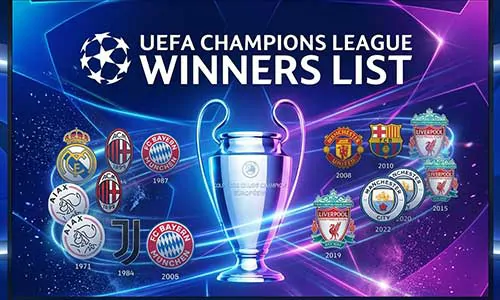
Since its inception in the mid-1950s, European club football’s premier competition has delivered unforgettable drama, legendary goals, and iconic champions. For football enthusiasts and historians alike, tracking the evolution of this tournament is a fascinating journey. This is why many fans frequently consult the comprehensive UEFA Champions League Winners List: Every Champion Since 1956 to relive these historic moments. From the early dominance of Spanish giants to the modern, tactical masterclasses of today’s elite squads, this list represents the absolute pinnacle of club football achievement.
Furthermore, understanding which teams have climbed the European mountain helps contextualize the modern landscape of the sport. Every trophy lifted tells a unique story of tactical innovations, legendary coaches, and generational talents who left an indelible mark on the pitch. Therefore, we have compiled an exhaustive history, detailed statistical insights, and the complete record of every final to satisfy your football curiosity.
Table of Contents
The Evolution of the UEFA Champions League Winners List: Every Champion Since 1956
The prestigious tournament originally began in 1955 as the European Champion Clubs’ Cup, conceptualized by the French sports newspaper L’Équipe. In its early years, only the domestic league champions of each country and the reigning cup holders were invited to compete. Consequently, the tournament was a straightforward, high-stakes knockout competition that quickly captured the imagination of football fans across the continent.
However, the football landscape underwent a massive transformation ahead of the 1992-1993 season. UEFA rebranded the tournament into the UEFA Champions League, introducing a group stage and a highly recognizable visual identity. This change allowed multiple top-tier clubs from the strongest leagues to qualify, which significantly elevated the quality and commercial appeal of the competition.
Additionally, further format adjustments in 1997 and 1999 allowed non-champions to enter, transforming the tournament into a multi-billion euro spectacle. Most recently, the 2024-2025 season introduced a revolutionary 36-team single league phase. This new format replaced the classic group stage to guarantee more high-profile matchups early in the competition. As a result, qualifying for the final has become a grueling test of depth, consistency, and tactical flexibility.
Defining Eras of European Football Dominance
Historically, the history of European club football can be divided into distinct eras where single teams or countries exerted unmatched dominance. The late 1950s belonged entirely to Real Madrid, who secured the first five titles consecutively. Led by superstars like Alfredo Di Stéfano and Ferenc Puskás, they set a standard of continental excellence that remains the benchmark for modern clubs.
Subsequently, the 1960s witnessed a tactical shift. Portuguese champions Benfica broke Madrid’s monopoly, followed by the rise of Italian defensive mastery known as Catenaccio. Milanese rivals AC Milan and Inter Milan dominated the decade with highly structured, defensive strategies that choked opponents while relying on clinical counter-attacks to secure continental success.
In comparison, the 1970s belonged to the revolutionaries of Northern Europe. Dutch powerhouse Ajax introduced the world to “Total Football,” winning three consecutive titles between 1971 and 1973. Immediately after, German giants Bayern Munich matched this feat by winning three consecutive titles of their own, utilizing a physical and highly organized style of play led by Franz Beckenbauer.
Following this era, English football experienced an unprecedented golden age between 1977 and 1984. During this period, English clubs won seven out of eight trophies, with Liverpool, Nottingham Forest, and Aston Villa showcasing incredible tactical discipline. However, this dominance was abruptly halted in the mid-1980s, opening the door for Italian clubs, particularly Arrigo Sacchi’s legendary AC Milan squad, to redefine tactical preparation.
Ultimately, the modern era has been heavily defined by Spanish technical dominance, mixed with the financial and tactical rise of English and French powerhouses. Real Madrid achieved an unprecedented modern three-peat under Zinedine Zidane between 2016 and 2018, later securing their 15th title in 2024. Simultaneously, Manchester City emerged as a dominant force under Pep Guardiola, while Paris Saint-Germain established their own European dynasty with historic back-to-back triumphs in 2025 and 2026.
Exploring the UEFA Champions League Winners List: Every Champion Since 1956
To fully appreciate the historical scope of European club football, examining the complete progression of champions is highly beneficial. Below is a detailed, year-by-year breakdown of every final played in the tournament’s history. This comprehensive record includes the final score, the runner-up, and the iconic venue that hosted the climax of the European football calendar.
| Year | Champions | Score | Runners-Up | Venue |
|---|---|---|---|---|
| 1956 | Real Madrid (Spain) | 4–3 | Reims (France) | Parc des Princes, Paris |
| 1957 | Real Madrid (Spain) | 2–0 | Fiorentina (Italy) | Santiago Bernabéu, Madrid |
| 1958 | Real Madrid (Spain) | 3–2 (aet) | AC Milan (Italy) | Heysel Stadium, Brussels |
| 1959 | Real Madrid (Spain) | 2–0 | Reims (France) | Neckarstadion, Stuttgart |
| 1960 | Real Madrid (Spain) | 7–3 | Eintracht Frankfurt (Germany) | Hampden Park, Glasgow |
| 1961 | Benfica (Portugal) | 3–2 | Barcelona (Spain) | Wankdorf Stadium, Bern |
| 1962 | Benfica (Portugal) | 5–3 | Real Madrid (Spain) | Olympisch Stadion, Amsterdam |
| 1963 | AC Milan (Italy) | 2–1 | Benfica (Portugal) | Wembley Stadium, London |
| 1964 | Inter Milan (Italy) | 3–1 | Real Madrid (Spain) | Praterstadion, Vienna |
| 1965 | Inter Milan (Italy) | 1–0 | Benfica (Portugal) | San Siro, Milan |
| 1966 | Real Madrid (Spain) | 2–1 | Partizan (Yugoslavia) | Heysel Stadium, Brussels |
| 1967 | Celtic (Scotland) | 2–1 | Inter Milan (Italy) | Estádio Nacional, Oeiras |
| 1968 | Manchester United (England) | 4–1 (aet) | Benfica (Portugal) | Wembley Stadium, London |
| 1969 | AC Milan (Italy) | 4–1 | Ajax (Netherlands) | Santiago Bernabéu, Madrid |
| 1970 | Feyenoord (Netherlands) | 2–1 (aet) | Celtic (Scotland) | San Siro, Milan |
| 1971 | Ajax (Netherlands) | 2–0 | Panathinaikos (Greece) | Wembley Stadium, London |
| 1972 | Ajax (Netherlands) | 2–0 | Inter Milan (Italy) | De Kuip, Rotterdam |
| 1973 | Ajax (Netherlands) | 1–0 | Juventus (Italy) | Crvena Zvezda Stadium, Belgrade |
| 1974 | Bayern Munich (Germany) | 4–0 (replay) | Atlético Madrid (Spain) | Heysel Stadium, Brussels |
| 1975 | Bayern Munich (Germany) | 2–0 | Leeds United (England) | Parc des Princes, Paris |
| 1976 | Bayern Munich (Germany) | 1–0 | Saint-Étienne (France) | Hampden Park, Glasgow |
| 1977 | Liverpool (England) | 3–1 | Borussia Mönchengladbach (Germany) | Stadio Olimpico, Rome |
| 1978 | Liverpool (England) | 1–0 | Club Brugge (Belgium) | Wembley Stadium, London |
| 1979 | Nottingham Forest (England) | 1–0 | Malmö FF (Sweden) | Olympiastadion, Munich |
| 1980 | Nottingham Forest (England) | 1–0 | Hamburg (Germany) | Santiago Bernabéu, Madrid |
| 1981 | Liverpool (England) | 1–0 | Real Madrid (Spain) | Parc des Princes, Paris |
| 1982 | Aston Villa (England) | 1–0 | Bayern Munich (Germany) | De Kuip, Rotterdam |
| 1983 | Hamburg (Germany) | 1–0 | Juventus (Italy) | Olympic Stadium, Athens |
| 1984 | Liverpool (England) | 1–1 (4–2 p) | Roma (Italy) | Stadio Olimpico, Rome |
| 1985 | Juventus (Italy) | 1–0 | Liverpool (England) | Heysel Stadium, Brussels |
| 1986 | Steaua București (Romania) | 0–0 (2–0 p) | Barcelona (Spain) | Ramón Sánchez Pizjuán, Seville |
| 1987 | Porto (Portugal) | 2–1 | Bayern Munich (Germany) | Praterstadion, Vienna |
| 1988 | PSV Eindhoven (Netherlands) | 0–0 (6–5 p) | Benfica (Portugal) | Neckarstadion, Stuttgart |
| 1989 | AC Milan (Italy) | 4–0 | Steaua București (Romania) | Camp Nou, Barcelona |
| 1990 | AC Milan (Italy) | 1–0 | Benfica (Portugal) | Praterstadion, Vienna |
| 1991 | Red Star Belgrade (Yugoslavia) | 0–0 (5–3 p) | Marseille (France) | Stadio San Nicola, Bari |
| 1992 | Barcelona (Spain) | 1–0 (aet) | Sampdoria (Italy) | Wembley Stadium, London |
| 1993 | Marseille (France) | 1–0 | AC Milan (Italy) | Olympiastadion, Munich |
| 1994 | AC Milan (Italy) | 4–0 | Barcelona (Spain) | Olympic Stadium, Athens |
| 1995 | Ajax (Netherlands) | 1–0 | AC Milan (Italy) | Ernst-Happel-Stadion, Vienna |
| 1996 | Juventus (Italy) | 1–1 (4–2 p) | Ajax (Netherlands) | Stadio Olimpico, Rome |
| 1997 | Borussia Dortmund (Germany) | 3–1 | Juventus (Italy) | Olympiastadion, Munich |
| 1998 | Real Madrid (Spain) | 1–0 | Juventus (Italy) | Amsterdam Arena, Amsterdam |
| 1999 | Manchester United (England) | 2–1 | Bayern Munich (Germany) | Camp Nou, Barcelona |
| 2000 | Real Madrid (Spain) | 3–0 | Valencia (Spain) | Stade de France, Saint-Denis |
| 2001 | Bayern Munich (Germany) | 1–1 (5–4 p) | Valencia (Spain) | San Siro, Milan |
| 2002 | Real Madrid (Spain) | 2–1 | Bayer Leverkusen (Germany) | Hampden Park, Glasgow |
| 2003 | AC Milan (Italy) | 0–0 (3–2 p) | Juventus (Italy) | Old Trafford, Manchester |
| 2004 | Porto (Portugal) | 3–0 | Monaco (France) | Arena AufSchalke, Gelsenkirchen |
| 2005 | Liverpool (England) | 3–3 (3–2 p) | AC Milan (Italy) | Atatürk Olympic Stadium, Istanbul |
| 2006 | Barcelona (Spain) | 2–1 | Arsenal (England) | Stade de France, Saint-Denis |
| 2007 | AC Milan (Italy) | 2–1 | Liverpool (England) | Olympic Stadium, Athens |
| 2008 | Manchester United (England) | 1–1 (6–5 p) | Chelsea (England) | Luzhniki Stadium, Moscow |
| 2009 | Barcelona (Spain) | 2–0 | Manchester United (England) | Stadio Olimpico, Rome |
| 2010 | Inter Milan (Italy) | 2–0 | Bayern Munich (Germany) | Santiago Bernabéu, Madrid |
| 2011 | Barcelona (Spain) | 3–1 | Manchester United (England) | Wembley Stadium, London |
| 2012 | Chelsea (England) | 1–1 (4–3 p) | Bayern Munich (Germany) | Allianz Arena, Munich |
| 2013 | Bayern Munich (Germany) | 2–1 | Borussia Dortmund (Germany) | Wembley Stadium, London |
| 2014 | Real Madrid (Spain) | 4–1 (aet) | Atlético Madrid (Spain) | Estádio da Luz, Lisbon |
| 2015 | Barcelona (Spain) | 3–1 | Juventus (Italy) | Olympiastadion, Berlin |
| 2016 | Real Madrid (Spain) | 1–1 (5–3 p) | Atlético Madrid (Spain) | San Siro, Milan |
| 2017 | Real Madrid (Spain) | 4–1 | Juventus (Italy) | Millennium Stadium, Cardiff |
| 2018 | Real Madrid (Spain) | 3–1 | Liverpool (England) | NSC Olimpiyskiy Stadium, Kyiv |
| 2019 | Liverpool (England) | 2–0 | Tottenham Hotspur (England) | Metropolitano Stadium, Madrid |
| 2020 | Bayern Munich (Germany) | 1–0 | Paris Saint-Germain (France) | Estádio da Luz, Lisbon |
| 2021 | Chelsea (England) | 1–0 | Manchester City (England) | Estádio do Dragão, Porto |
| 2022 | Real Madrid (Spain) | 1–0 | Liverpool (England) | Stade de France, Saint-Denis |
| 2023 | Manchester City (England) | 1–0 | Inter Milan (Italy) | Atatürk Olympic Stadium, Istanbul |
| 2024 | Real Madrid (Spain) | 2–0 | Borussia Dortmund (Germany) | Wembley Stadium, London |
| 2025 | Paris Saint-Germain (France) | 5–0 | Inter Milan (Italy) | Allianz Arena, Munich |
| 2026 | Paris Saint-Germain (France) | 1–1 (4–3 p) | Arsenal (England) | Puskás Aréna, Budapest |
Statistical Breakdown of the UEFA Champions League Winners List: Every Champion Since 1956
Analyzing the numerical trends within the historical database reveals fascinating hierarchies in European football. Specifically, a select group of clubs has repeatedly demonstrated the ability to conquer the continent. Consequently, Spain leads all other nations in total triumphs, heavily propelled by Real Madrid’s unmatched record.
Below is a quick overview of the most successful clubs since the tournament’s inaugural season in 1956:
- Real Madrid (Spain): 15 titles
- AC Milan (Italy): 7 titles
- Bayern Munich (Germany): 6 titles
- Liverpool (England): 6 titles
- Barcelona (Spain): 5 titles
- Ajax (Netherlands): 4 titles
- Manchester United (England): 3 titles
- Inter Milan (Italy): 3 titles
- Juventus (Italy): 2 titles
- Benfica (Portugal): 2 titles
- Chelsea (England): 2 titles
- Nottingham Forest (England): 2 titles
- Porto (Portugal): 2 titles
- Paris Saint-Germain (France): 2 titles (victories in 2025 and 2026)
Furthermore, from a national perspective, Spain dominates the landscape with 20 trophies. England follows in second place with 15 trophies, while Italy sits in third with 12 triumphs. These three leagues have historically generated the most competitive clubs, showcasing why they remain the most-watched domestic campaigns globally.
High-Quality Football Resources
For readers eager to dive deeper into historical match analyses, tactical break-downs, or up-to-date club rankings, we highly recommend visiting official sources. These platforms offer verified updates and in-depth profiles for every season:
- Discover comprehensive statistics, official match highlights, and historical player rosters directly on the Official UEFA Champions League Website.
- Explore detailed tournament tables, participant histories, and structural evolution at Wikipedia’s List of European Cup and UEFA Champions League Finals.
Frequently Asked Questions (FAQ)
Q1: Which club has won the most UEFA Champions League titles?
A1: Real Madrid is the most successful club in tournament history, having captured 15 titles, with their most recent victory coming in 2024.
Q2: Who are the current champions of the UEFA Champions League?
A2: Paris Saint-Germain are the reigning champions, having successfully defended their title in 2026 by defeating Arsenal on penalties in Budapest.
Q3: Which country has produced the highest number of Champions League winners?
A3: Spain leads all nations with 20 titles in total, divided between Real Madrid (15) and Barcelona (5).
Q4: Has any team won the tournament back-to-back in the modern era?
A4: Yes, in the modern Champions League era, Real Madrid achieved a historic three-peat (2016, 2017, and 2018). More recently, Paris Saint-Germain became the second team to defend their title in back-to-back years (2025 and 2026).
Q5: When did the European Cup rebrand to the UEFA Champions League?
A5: The rebranding occurred at the start of the 1992-1993 season, moving from a pure knockout format to introducing a group stage and the iconic tournament anthem.
Q6: Which player has won the most Champions League titles?
A6: Paco Gento holds the absolute record with 6 European Cup titles with Real Madrid. Modern legends like Luka Modrić, Dani Carvajal, and Toni Kroos have also matched Gento’s record of 6 titles.
Conclusion
Ultimately, European night football represents the highest caliber of sporting theater. Tracking the UEFA Champions League Winners List: Every Champion Since 1956 allows us to appreciate how tactical trends, superstar players, and financial landscapes have evolved over more than seven decades of competition.
Consequently, the tournament’s allure remains completely unmatched, and the transition to the single league phase ensures that the competitive spirit will only grow. What is your favorite final in Champions League history? Do you think a new club will break into this historic winners list next season? Share your thoughts and predictions in the comments below!