Gegenpressing Explained: The High-Pressure Football Strategy
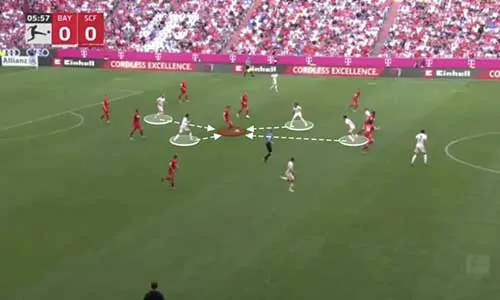
Table of Contents
- 1. Understanding the Tactical Revolution
- 2. The Historical Origins of Counter-Pressing
- 3. The Core Philosophy and the 5-Second Rule
- 4. The Four Tactical Variations of the Press
- 5. Player Profiles and Physical Demands
- 6. Tactical Strengths and Vulnerabilities
- 7. How Elite Teams Counter the High Press
- 8. Conclusion: The Legacy of Modern Pressing
- 9. Frequently Asked Questions (FAQs)
Modern football moves at an incredibly breathtaking pace, leaving teams with very little time to think, organize, or breathe on the pitch. If you have watched elite European football over the last decade, you have undoubtedly witnessed teams hunting in packs the very second they lose possession. In this comprehensive tactical breakdown, we present Gegenpressing Explained: The High-Pressure Football Strategy that has completely revolutionized the beautiful game.
Originally popularized in Germany, this tactical approach has shifted from a niche defensive concept to the dominant philosophy of modern football. Coaches like Jürgen Klopp, Pep Guardiola, and Ralf Rangnick have used it to dominate domestic and international tournaments. Consequently, understanding how this system operates is crucial for any football enthusiast, analyst, or aspiring coach.
Therefore, we will explore the intricate mechanisms, historical roots, physical requirements, and tactical vulnerabilities of this fascinating setup. By analyzing its core components, you will discover why this high-intensity system remains a nightmare for unprepared opponents.
Gegenpressing Explained: The High-Pressure Football Strategy in Modern Football
To truly grasp this concept, we must first break down the literal meaning of the German term. “Gegen” translates to “counter” or “against,” while “pressing” refers to the act of closing down opponents to win the ball. Therefore, the tactical phrase literally translates to “counter-pressing.”
Unlike traditional defensive blocks, which prioritize dropping back into a compact shape after losing possession, counter-pressing demands an immediate forward movement. Instead of retreating, the team that has just lost the ball aggressively swarms the opponent who won it. This transition phase is the exact moment when the defensive side is most disorganized and vulnerable.
Furthermore, the primary objective is not merely to prevent a counter-attack, but rather to launch a direct attack of your own high up the pitch. By recovering the ball within the opponent’s half, your attackers face a defensive line that is wide open and out of position. As a result, this defensive action serves as one of the most effective playmaker tools in modern football.
To learn more about how tactical shifts impact the structure of the game, you can check out the in-depth tactical guides on The Coaches’ Voice, which details the elite coaching implementations of this system.
The Origins of Gegenpressing Explained: The High-Pressure Football Strategy
While many contemporary fans associate this intense style exclusively with Jürgen Klopp’s Borussia Dortmund and Liverpool teams, its roots stretch back much further. Historically, elements of this strategy can be traced to the legendary Soviet coach Viktor Maslov in the 1960s. Maslov revolutionized Dynamo Kyiv by introducing zone pressing, which abandoned individual man-marking in favor of collective space control.
Later, during the 1970s, Rinus Michels and Johan Cruyff integrated these ideas into their famous “Total Football” philosophy at Ajax and Barcelona. They realized that to keep possession of the ball, they had to compress the pitch. Consequently, players were instructed to pressure opponents immediately upon losing the ball, reducing the playing area drastically.
In the late 1980s, Arrigo Sacchi’s AC Milan perfected this high defensive line, utilizing strict coordination to squeeze the space between midfield and defense. However, it was Ralf Rangnick—often dubbed the “Godfather of Gegenpressing”—who synthesized these concepts in Germany during the late 1990s and 2000s. He created a structured, mathematical approach that transformed German football and laid the groundwork for future tacticians.
The Core Philosophy: Squeezing the Transition Phase
At the heart of this tactical setup lies a profound understanding of human psychology and tactical geometry. When a defending team wins the ball, their players naturally begin to expand and move outward to transition into an attacking shape. In doing so, they leave their compact defensive positions and create open gaps between themselves.
This exact moment of expansion is when the counter-pressing team strikes. Because the opponent is transitioning, they are highly disorganized and mentally unprepared to defend immediately. By applying intense pressure at this split second, the counter-pressing team exploits their opponent’s structural instability.
To implement this successfully, teams rely on what is widely known as the “5-Second Rule.” If a team cannot win the ball back within five seconds of losing it, they must quickly abandon the aggressive press. In such scenarios, they drop back into a compact mid-block or low-block to avoid being bypassed and exposed defensively.
| Tactical Phase | Traditional Defensive Philosophy | Gegenpressing Philosophy |
|---|---|---|
| Immediate Reaction | Drop back, recover defensive shape, and delay the attack. | Sprint forward, swarm the ball-carrier, and block passing lanes. |
| Pitch Location Focus | Defending own half and protecting the penalty box. | Defending inside the opponent’s half to keep them pinned deep. |
| Main Playmaking Engine | Relying on central midfielders to build play slowly from the back. | Using high turnovers as the primary source of goalscoring chances. |
| Defensive Line Placement | Deep or medium defensive line to prevent runs behind the defense. | An extremely high defensive line to compress the active playing field. |
The Four Tactical Variations of the Press
Not all counter-pressing styles are created equal. Depending on the manager’s tactical preferences and the squad’s strengths, teams will employ one of four distinct pressing methods. Understanding these nuances helps us appreciate how different managers manipulate space on the pitch.
1. Space-Oriented Gegenpressing (Klopp Style)
In this variation, the focus is entirely on the space surrounding the ball-carrier. When the ball is lost, multiple players immediately converge on the opponent in possession from all angles. Rather than worrying about specific passing lanes, they choke the immediate area, suffocating the player with numbers and intense physical presence.
2. Passing-Lane-Oriented Gegenpressing (Guardiola Style)
Pep Guardiola’s approach is far more structured and geometric. Instead of rushing directly at the ball-carrier in a chaotic pack, players focus on cutting off all available passing lanes. One player will gently pressure the ball-carrier while others position themselves perfectly to intercept any escape passes. This method saves physical energy while maintaining high defensive security.
3. Man-Oriented Gegenpressing
This traditional variation requires players to immediately lock onto the nearest opponent in their zone. The moment possession changes, every player tightly marks their closest target. Because all passing options are physically blocked by tight markers, the ball-carrier is forced to make a hasty clearance, which is easily cleaned up by the deep defenders.
4. Ball-Oriented Gegenpressing (Rangnick Style)
In this hyper-aggressive approach, the ball itself is the ultimate target. Regardless of player positions or passing lanes, the team hunts the ball directly. Players move together as a single unit to compress the space around the ball, forcing the opponent into physical physical errors through sheer speed and aggressive tackling.
Applying Gegenpressing Explained: The High-Pressure Football Strategy in Training
Executing this strategy requires an incredible amount of physical preparation and mental coordination. Because the entire system relies on synchronous movement, a single player failing to press can collapse the entire defensive structure. Therefore, managers spend countless hours in training simulating high-pressure scenarios.
The most famous training drill used to teach this is the “Rondo.” In a typical rondo, a small group of players keeps possession of the ball in a tight circle while one or two players in the middle try to win it back. Under a pressing manager, the moment the players in the middle win the ball, the dynamic changes instantly, forcing the outer ring to counter-press immediately.
Furthermore, tactical intelligence is just as critical as physical stamina. Players must possess elite cognitive processing speed to identify “pressing triggers.” A pressing trigger is a specific action by the opponent that signals the perfect moment to launch the press. Examples include a loose touch, a slow pass, or an opponent receiving the ball with their back turned to the play.
To gain a deeper perspective on how youth academies teach these complex modern tactical triggers, you can refer to the comprehensive training guides hosted on the FIFA Training Centre.
Player Profiles and Physical Demands
It is impossible to run a high-pressure system with passive or physically slow players. To sustain this intense style for 90 minutes, a club must recruit specific profiles for every position on the pitch. Let us look at the essential characteristics required for each role.
First, the forward line must consist of tireless runners who are willing to defend from the front. Instead of waiting for service, these modern forwards are the first line of defense. They must possess explosive acceleration to close down central defenders and goaltenders, forcing them into hasty decisions.
Second, the midfield department requires players with immense stamina, tactical awareness, and spatial intelligence. Midfielders must constantly shift laterally to cover open space left by advancing forwards. They need to be incredibly comfortable in physical duels and possess the technique to distribute the ball quickly after a turnover.
Finally, the defensive unit must be comfortable playing with a very high line, often pushing up to the halfway circle. This requires central defenders who possess elite recovery speed to catch attackers who beat the offside trap. Additionally, the goalkeeper must act as a “sweeper-keeper,” positioned far outside their penalty box to sweep up long clearances.
Tactical Strengths and Vulnerabilities
Like any tactical philosophy in football, this aggressive strategy comes with a unique set of advantages and disadvantages. While it can completely dominate weaker teams, it also carries inherent risks that smart opponents can exploit.
- Unmatched Offensive Creativity: By winning the ball back high up the pitch, your team attacks when the opponent is completely out of position, leading to highly efficient goalscoring opportunities.
- Defensive Protection: Stopping the opponent’s counter-attack at the source prevents them from ever reaching your half of the pitch, reducing the defensive workload of your center-backs.
- Psychological Dominance: Relentless pressure drains the opponent’s confidence, forcing them into a state of panic every time they receive the ball.
Conversely, the primary vulnerability of this system is the massive space left behind the high defensive line. If an opponent possesses press-resistant players who can successfully bypass the initial wave of pressure, they can easily launch devastating counter-attacks into wide-open space.
Additionally, the physical demands of this style are incredibly grueling. Over the course of a long season, teams running this high-intensity setup often experience a high volume of soft-tissue injuries and mental fatigue, leading to a drop-off in performance during the crucial winter months.
How Elite Teams Counter the High Press
As this style of play became dominant, opposing managers had to find creative ways to bypass the relentless pressure. Today, elite teams have developed highly sophisticated methods to neutralize even the most aggressive counter-pressing setups.
One common method is the use of “press-resistant” midfielders. Players like Sergio Busquets, Rodri, or Frenkie de Jong possess exceptional calm under pressure and elite spatial awareness. They can receive the ball in tight areas, shield it from multiple defenders, and play quick, pinpoint passes to break the pressing lines.
Another popular strategy is utilizing a direct, direct long-ball approach. Instead of slowly building play from the back, goalkeeper and defenders bypass the crowded midfield entirely by playing long, accurate diagonals to tall target men or rapid wingers. By doing so, they completely eliminate the danger of high-pressing turnovers in their own defensive third.
Finally, teams often implement a “low block” defensive strategy, withdrawing all eleven players into their own penalty box. By conceding possession and refusing to expand, they deny the pressing team the space and transition opportunities they desperately need to create chances.
Conclusion: The Legacy of Modern Pressing
In summary, this high-intensity approach has forever altered the tactical landscape of modern football. It is no longer just an alternative strategy; rather, it is a fundamental element that every top-tier football team must master to compete at the highest level of the game.
By transforming the transition phase into a potent attacking weapon, coaches have turned defensive actions into pure creative artistry. While the physical demands and tactical risks are incredibly high, the rewards of lifting major trophies speak for themselves.
Are you ready to see how these tactics play out in the next big match? Keep a close eye on the players’ movements the very moment they lose possession. You will quickly begin to spot the intricate patterns of modern counter-pressing unfolding right before your eyes.
Frequently Asked Questions (FAQs)
What is the main difference between pressing and Gegenpressing?
Traditional pressing is a defensive shape designed to win the ball back when the opponent has established possession. In contrast, Gegenpressing is an immediate, aggressive reaction that occurs the exact second your team loses the ball, targeting the opponent’s transition phase.
Who invented the Gegenpressing system?
While elements of high pressing existed in Soviet and Dutch football during the 1960s and 70s, modern Gegenpressing was synthesized and structured in Germany by Ralf Rangnick and later popularized worldwide by Jürgen Klopp.
Why is the “5-second rule” so important in this tactic?
The 5-second rule is crucial because it protects the team’s defensive structure. If the ball is not recovered immediately, the opponent will have organized their passing options, making a continued high press extremely risky and easy to bypass.
What physical attributes do players need for this style?
Players must possess elite aerobic endurance, explosive acceleration, high mental alertness, and rapid recovery speed. Without these physical traits, players cannot sustain the constant sprinting required to close down spaces.
Can a team play this high-pressure style for an entire season?
It is highly challenging to maintain this intensity for a full season. Teams that attempt to do so without proper squad rotation often suffer from severe player burnout and muscle injuries during the latter half of the campaign.
How do you beat a high-pressing team?
To beat a high-pressing team, you can use highly press-resistant midfielders to bypass the pressure, play long direct passes to bypass the midfield entirely, or drop into a deep defensive block to deny them transition space.