FIFA World Cup 2026 Venues: Iconic Stadiums Hosting the Tournament
The 2026 FIFA World Cup is set to be a historic milestone, bringing together an unprecedented 48 nations across three host countries: Canada, Mexico, and the United States. Given the massive expansion of the tournament, selecting the right arenas was critical for FIFA organizers to ensure seamless operations and outstanding fan experiences. If you are preparing for this massive sporting event, exploring the FIFA World Cup 2026 Venues: Iconic Stadiums Hosting the Tournament is essential for mapping out your travel and ticketing plans. This comprehensive guide details all 16 spectacular arenas, highlighting their capacity, unique characteristics, and match significance.
Furthermore, because the tournament spans three massive nations, travel and geography will play a major role in how matches are contested. From the high-altitude pitch of Mexico City to the cutting-edge indoor arenas of the United States, each location offers players and fans a completely distinct atmosphere. Therefore, knowing what to expect from each stadium can greatly enhance your match-day experience. Let us dive deep into the specific details of these extraordinary stadiums.
Table of Contents
- United States Stadiums
- Mexico Stadiums
- Canada Stadiums
- Complete Venue Comparison Table
- Logistics, Climate, and Travel Challenges
- Frequently Asked Questions (FAQ)
United States – FIFA World Cup 2026 Venues: Iconic Stadiums Hosting the Tournament
The United States will host the majority of the tournament’s matches, utilizing 11 state-of-the-art arenas that are normally home to National Football League (NFL) teams. These venues represent the peak of modern sports engineering, featuring massive capacities, high-tech amenities, and retractable roofs. Let us examine each of these iconic locations individually.
MetLife Stadium (New York/New Jersey)
Located in East Rutherford, New Jersey, MetLife Stadium is one of the most commercially significant venues in North America. Opened in 2010 to replace the historic Giants Stadium, it serves as the home ground for both the New York Giants and the New York Jets. With a massive seating capacity of approximately 82,500, it provides an outstanding platform for large-scale events. Consequently, FIFA has chosen this venue to host the highly anticipated World Cup Final on July 19, 2026.
To comply with FIFA standards, the stadium will replace its synthetic turf with a state-of-the-art natural grass playing surface. Additionally, significant transportation upgrades are underway to handle the massive influx of international fans traveling from New York City. As the designated arena for the final match, this location represents a flagship option among the FIFA World Cup 2026 Venues: Iconic Stadiums Hosting the Tournament.
AT&T Stadium (Dallas, Texas)
Located in Arlington, Texas, AT&T Stadium is affectionately known as “Jerry World” after Dallas Cowboys owner Jerry Jones. It is celebrated for its retractable roof, massive center-hung high-definition video board, and luxurious amenities. Since its opening in 2009, this venue has consistently hosted massive sporting events, including the Super Bowl, NBA All-Star games, and major international soccer friendlies. Therefore, it is perfectly suited to handle the pressure of multiple knockout-stage matches.
The stadium is structurally designed to expand its seating capacity past 100,000 for special events, making it a key venue for the semi-final rounds. Moreover, the scale of this stadium perfectly aligns with the ambition of the FIFA World Cup 2026 Venues: Iconic Stadiums Hosting the Tournament. Its central location in North America also makes it a convenient hub for visiting supporters.
Mercedes-Benz Stadium (Atlanta, Georgia)
In Atlanta, Georgia, Mercedes-Benz Stadium stands as a marvel of contemporary design and sustainability. Completed in 2017, it features a unique, pinwheel-style retractable roof and a massive 360-degree “halo” video board that dominates the interior. Home to Atlanta United of MLS and the Atlanta Falcons of the NFL, the venue is already highly experienced in managing passionate soccer crowds. Furthermore, the eco-friendly design here sets a precedent for all other FIFA World Cup 2026 Venues: Iconic Stadiums Hosting the Tournament.
For the upcoming matches, the stadium will lay down a specialized temporary natural grass surface over its usual turf. Given its strategic location in the American South, Atlanta will act as a major node for fans traveling between different host cities.
SoFi Stadium (Los Angeles, California)
SoFi Stadium, located in Inglewood, California, is one of the newest and most expensive sports arenas ever built. Opened in 2020, this stunning venue features an indoor-outdoor design covered by a translucent canopy roof. It is home to both the Los Angeles Rams and Los Angeles Chargers. The stadium’s centerpiece is the Infinity Screen by Samsung, a double-sided, oval video board suspended above the field that delivers unparalleled visual clarity. Therefore, in terms of technological advancements, this arena stands out as a prime example of what makes the FIFA World Cup 2026 Venues: Iconic Stadiums Hosting the Tournament so unique.
To host matches, SoFi Stadium underwent structural modifications to widen its field area to meet FIFA’s strict dimension requirements. Consequently, fans can look forward to watching high-intensity soccer in one of the world’s most luxurious architectural masterpieces.
Hard Rock Stadium (Miami, Florida)
Located in Miami Gardens, Florida, Hard Rock Stadium is a multi-purpose venue with a rich history of hosting marquee events. From multiple Super Bowls to the Miami Open tennis tournament and even the Formula 1 Miami Grand Prix, this arena is highly versatile. It features an open-air canopy that protects 90% of spectators from the South Florida sun while keeping the grass pitch exposed to natural sunlight. Spectators visiting this coastal stadium will experience firsthand why the FIFA World Cup 2026 Venues: Iconic Stadiums Hosting the Tournament are considered world-class.
Additionally, Miami’s status as a multicultural hub ensures that matches played here will feature an electric, globally diverse crowd. The stadium will host several matches, including the bronze medal match, making it a vital piece of the tournament puzzle.
Lumen Field (Seattle, Washington)
Lumen Field, situated in Seattle, Washington, is globally famous for its intense noise levels and passionate soccer culture. Home to the Seattle Sounders of MLS and the Seattle Seahawks of the NFL, this venue features a unique U-shaped design that offers stunning views of the Seattle skyline. The stadium’s acoustic design is purposefully engineered to trap sound, creating an intimidating atmosphere for visiting teams. Consequently, the crowd’s energy here will be a defining feature of the FIFA World Cup 2026 Venues: Iconic Stadiums Hosting the Tournament.
In preparation for the matches, Lumen Field is transitioning to grass, ensuring top-tier playability for the athletes. Fans attending games in the Pacific Northwest can expect a historic soccer atmosphere unlike any other.
Levi’s Stadium (San Francisco Bay Area, California)
Located in Santa Clara, California, Levi’s Stadium is the high-tech home of the San Francisco 49ers. Opened in 2014, it was designed with a heavy emphasis on sustainability and technological innovation. It features a green roof, solar panels, and a state-of-the-art mobile app integration that enhances the fan experience. As a result, visiting this Silicon Valley location offers a glimpse of how modern design integrates with the eco-system of the FIFA World Cup 2026 Venues: Iconic Stadiums Hosting the Tournament.
Moreover, the stadium’s open design allows for excellent sightlines from almost every seat. This tech-centric arena will host several group stage and knockout matches, drawing tech-savvy sports enthusiasts from all over the world.
Arrowhead Stadium (Kansas City, Missouri)
Arrowhead Stadium in Kansas City, Missouri, is a legendary venue with a reputation for raw fan passion and history. Opened in 1972 and heavily renovated over the years, it holds the Guinness World Record for the loudest outdoor stadium. For decades, it has served as the beloved home of the Kansas City Chiefs. Consequently, the acoustic power of this venue will provide a daunting task for players visiting these FIFA World Cup 2026 Venues: Iconic Stadiums Hosting the Tournament.
While historically designed for American football, Arrowhead’s wide bowl design translates beautifully to soccer. This venue represents the heartland of American sports culture, offering international visitors a truly authentic experience.
NRG Stadium (Houston, Texas)
NRG Stadium, located in Houston, Texas, was the first NFL facility to feature a retractable roof when it opened in 2002. This multi-purpose dome is home to the Houston Texans and hosts the world-renowned Houston Livestock Show and Rodeo. Its adaptable design allows it to quickly transition from a dirt-covered arena to a pristine soccer pitch. Therefore, the versatility of this dome serves as a vital component in the network of the FIFA World Cup 2026 Venues: Iconic Stadiums Hosting the Tournament.
Houston’s humid climate will not affect matches played here, as the climate-controlled indoor environment ensures comfort for both players and spectators. This makes NRG Stadium a reliable and highly functional choice for high-stakes matches.
Gillette Stadium (Boston, Massachusetts)
Located in Foxborough, Massachusetts, Gillette Stadium serves as the home base for the New England Patriots and the New England Revolution. Opened in 2002, this open-air venue is surrounded by “Patriot Place,” a massive shopping and entertainment complex that provides excellent pre-game dining and retail options for fans. Additionally, the historic value of this sports region adds massive prestige to the list of FIFA World Cup 2026 Venues: Iconic Stadiums Hosting the Tournament.
To prepare for the global stage, Gillette Stadium has undergone extensive renovations, including the installation of a massive new outdoor video board. Its proximity to Boston ensures a heavy influx of East Coast and European soccer enthusiasts.
Lincoln Financial Field (Philadelphia, Pennsylvania)
Lincoln Financial Field, situated in Philadelphia, Pennsylvania, is known for its intense, passionate fan base. Since its opening in 2003, “The Linc” has hosted numerous high-profile soccer matches, including international friendlies and Gold Cup fixtures. Consequently, fans visiting this historic city will experience a unique, passionate atmosphere characteristic of the FIFA World Cup 2026 Venues: Iconic Stadiums Hosting the Tournament.
The stadium’s architectural design features open corners that allow spectators to catch glimpses of the Philadelphia skyline. Furthermore, its excellent public transit links make it highly accessible for visitors staying in the downtown area.
Mexico – FIFA World Cup 2026 Venues: Iconic Stadiums Hosting the Tournament
Mexico brings a legendary soccer heritage to this joint bid. As the first country to host the World Cup three times, its selected stadiums represent a perfect blend of historic football romance and modern architectural updates. Let us explore the three Mexican venues that will showcase the country’s unparalleled passion for the beautiful game.
Estadio Azteca (Mexico City)
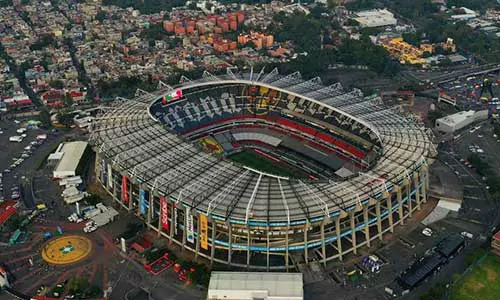
No stadium in the world holds a more sacred status in soccer history than Estadio Azteca in Mexico City. Opened in 1966, this legendary arena has hosted two World Cup Finals (1970 and 1986), witnessing the crowning achievements of football icons Pelé and Diego Maradona. With its massive seating capacity of approximately 87,200, the atmosphere inside the Azteca is famously electric and intimidating. Stepping onto the turf here connects the modern generation directly with the history of the FIFA World Cup 2026 Venues: Iconic Stadiums Hosting the Tournament.
For the 2026 tournament, Estadio Azteca will host the opening match, marking Mexico’s official entry into the games. Significant renovations have been carried out to upgrade its luxury suites, dressing rooms, and media facilities, ensuring this historic temple meets modern FIFA requirements.
Estadio BBVA (Monterrey)
In stark contrast to the historic Azteca, Estadio BBVA in Monterrey is a modern masterpiece. Opened in 2015, this stunning arena is nicknamed “El Gigante de Acero” (The Steel Giant) due to its striking metallic exterior. The stadium’s most famous feature is the breathtaking view of the Cerro de la Silla mountain visible from the stands, creating one of the most picturesque backdrops in sports. Indeed, the visual aesthetic of this stadium illustrates the geographic and architectural diversity of the FIFA World Cup 2026 Venues: Iconic Stadiums Hosting the Tournament.
Furthermore, the stadium features state-of-the-art environmental sustainability systems, utilizing rainwater harvesting and energy-efficient lighting. It stands as a testament to Monterrey’s status as an industrial and technological powerhouse in Mexico.
Estadio Akron (Guadalajara)
Located in Zapopan, near Guadalajara, Estadio Akron is the home of Club Deportivo Guadalajara (Chivas), one of Mexico’s most popular clubs. Opened in 2010, the stadium’s design is highly creative, resembling a grass-covered volcano with a white, cloud-like canopy floating above it. This unique aesthetic allows the structure to blend seamlessly with the surrounding landscape. Therefore, Guadalajara’s local passion will shine brightly as they welcome fans to one of the most vibrant FIFA World Cup 2026 Venues: Iconic Stadiums Hosting the Tournament.
With an intimate capacity of around 48,000, fans are positioned very close to the pitch, ensuring a loud and highly concentrated atmosphere. Consequently, matches held here are guaranteed to showcase the traditional, festive side of Mexican football culture.
Canada – FIFA World Cup 2026 Venues: Iconic Stadiums Hosting the Tournament
Canada is hosting the men’s FIFA World Cup for the first time in its history. The country has selected two distinct venues on opposite coasts, ensuring that the tournament’s excitement reaches fans from the Pacific to the Atlantic. Let us examine the Canadian stadiums ready to make history.
BC Place (Vancouver)
BC Place in Vancouver, British Columbia, is a spectacular multi-purpose stadium situated right on the edge of False Creek. Originally opened in 1983, it underwent a massive, multi-million-dollar renovation in 2011, which added a state-of-the-art cable-supported retractable roof and a massive center-hung scoreboard. This venue has successfully hosted the 2015 FIFA Women’s World Cup Final, proving its capability on the international stage. As Canada prepares to host, this West Coast gem highlights the environmental focus of the FIFA World Cup 2026 Venues: Iconic Stadiums Hosting the Tournament.
Additionally, the stunning natural beauty of Vancouver, with its surrounding mountains and ocean, will provide an unforgettable experience for visiting fans. BC Place will feature temporary natural grass for the tournament, offering optimal playing conditions.
BMO Field (Toronto)
BMO Field, also officially known as Toronto Stadium for the tournament, is located at Exhibition Place in Toronto, Ontario. Originally built as a soccer-specific stadium in 2007, it has been renovated multiple times to expand its capacity and accommodate both soccer and Canadian football. To meet FIFA’s seating guidelines, the stadium is undergoing temporary expansions to push its capacity beyond 45,000. Therefore, this venue represents the intimate and highly atmospheric end of the spectrum for the FIFA World Cup 2026 Venues: Iconic Stadiums Hosting the Tournament.
Consequently, the close proximity of the stands to the pitch at BMO Field will create a loud, dense environment. Located just minutes from downtown Toronto, it offers fans easy access to the city’s diverse dining and cultural offerings.
Complete Venue Comparison Table
To help you compare the scale and distribution of these locations, we have compiled a detailed table below. This analytical breakdown highlights the varying sizes and roles of the FIFA World Cup 2026 Venues: Iconic Stadiums Hosting the Tournament.
| Stadium Name | Host City & Country | Approx. Capacity | Key Tournament Highlight |
|---|---|---|---|
| MetLife Stadium | New York/New Jersey, USA | 82,500 | World Cup Final Match |
| AT&T Stadium | Dallas, USA | 80,000+ | Semi-Final Host |
| Mercedes-Benz Stadium | Atlanta, USA | 71,000 | Knockout Stage Matches |
| SoFi Stadium | Los Angeles, USA | 70,000 | USA Team Opening Match |
| Hard Rock Stadium | Miami, USA | 64,000 | Bronze Medal Match |
| Lumen Field | Seattle, USA | 69,000 | Group Stage Games |
| Levi’s Stadium | San Francisco, USA | 68,500 | Knockout Rounds |
| Arrowhead Stadium | Kansas City, USA | 76,000 | Quarter-Final Match |
| NRG Stadium | Houston, USA | 72,000 | Group & Knockout Matches |
| Gillette Stadium | Boston, USA | 65,000 | Knockout Rounds |
| Lincoln Financial Field | Philadelphia, USA | 67,000 | Round of 16 Match |
| Estadio Azteca | Mexico City, Mexico | 87,200 | Tournament Opening Match |
| Estadio BBVA | Monterrey, Mexico | 53,500 | Group Stage Games |
| Estadio Akron | Guadalajara, Mexico | 48,000 | Group Stage Games |
| BC Place | Vancouver, Canada | 54,000 | Knockout Rounds |
| BMO Field | Toronto, Canada | 45,000 | Canada Team Opening Match |
Logistics, Climate, and Travel Challenges
When examining the logistics, the wide distribution of the FIFA World Cup 2026 Venues: Iconic Stadiums Hosting the Tournament across three nations introduces unique challenges. In contrast to previous tournaments like Qatar 2022, where venues were situated within close driving distance, teams and fans in 2026 will face cross-continental journeys spanning up to four time zones. Therefore, physical recovery and smart travel scheduling will be absolutely paramount to success.
Furthermore, climate diversity will test the endurance of the players. For instance, playing in the high-altitude, hot environment of Mexico City at Estadio Azteca represents a stark difference from the mild, sea-level atmosphere of Vancouver at BC Place. Consequently, teams must adjust their training regimens to adapt to these contrasting conditions. Additionally, several arenas will temporarily install natural grass to meet the rigid requirements of FIFA, which could alter field dynamics during initial match days.
For fans, navigating these distances requires careful booking strategies. It is highly recommended to reference the Official FIFA Tournament Website for regional groupings and matches, which can significantly reduce travel times. Understanding how these factors interact will ensure a smoother tournament experience for everyone involved.
Conclusion & Call to Action
The 2026 World Cup is poised to deliver an unmatched celebration of global football. From the historic turf of Mexico City’s Estadio Azteca to the highly technological marvels like Los Angeles’ SoFi Stadium, the selected stadiums reflect the immense growth and global reach of soccer. Ultimately, the selection of the FIFA World Cup 2026 Venues: Iconic Stadiums Hosting the Tournament ensures that fans and teams will be treated to the very best facilities available today.
Whether you plan to attend the games in person or watch from home, keeping up with venue-specific updates, match schedules, and travel logistics will enrich your overall tournament experience. For a more detailed historical analysis of the tournament, you can explore the extensive archives on the Wikipedia 2026 FIFA World Cup Page. What stadium are you most excited to see in action? Share your thoughts with us in the comments below, and do not forget to sign up for our newsletter to receive the latest soccer updates delivered directly to your inbox!
Frequently Asked Questions (FAQ)
To help you navigate the details, we have answered some of the most common questions regarding the FIFA World Cup 2026 Venues: Iconic Stadiums Hosting the Tournament.
Which stadium will host the 2026 World Cup Final?
MetLife Stadium in East Rutherford, New Jersey (near New York City) has been officially designated as the host venue for the 2026 World Cup Final, scheduled to take place on July 19, 2026.
How many stadiums are hosting matches in Canada?
Canada will host matches in two selected stadiums: BC Place in Vancouver and BMO Field (referred to as Toronto Stadium) in Toronto.
Will all stadiums use natural grass for the tournament?
Yes, all 16 stadiums are required by FIFA to have natural grass playing surfaces. Venues that normally use artificial turf, such as SoFi Stadium and Mercedes-Benz Stadium, are installing temporary high-grade grass systems for the matches.
Which venue has the largest capacity?
Estadio Azteca in Mexico City has the largest official capacity at approximately 87,200, closely followed by MetLife Stadium in New York/New Jersey with approximately 82,500 seats.
Are there high-altitude stadiums in the tournament?
Yes, Estadio Azteca in Mexico City sits at an altitude of over 2,200 meters (approx. 7,300 feet) above sea level, which will present a unique cardiovascular challenge for players accustomed to sea-level environments.
How can fans purchase tickets for specific venues?
Fans should register and purchase tickets exclusively through the official FIFA portal. It is advised to monitor regional match allocations to avoid excessive travel distances between venues.