Ballon d’Or Winners Ranked: Players with the Most Awards
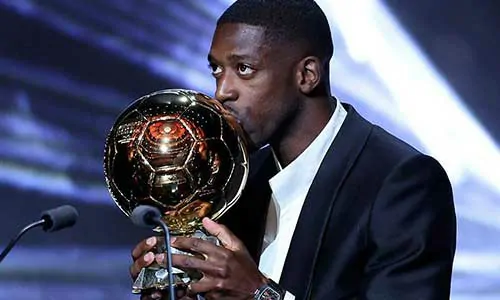
Table of Contents
- 1. Introduction to Football’s Grandest Prize
- 2. Ballon d’Or Winners Ranked: Players with the Most Awards
- 3. Deep Dive into the Multi-Time Legends (3+ Trophies)
- 4. The Elite Two-Time Recipients
- 5. How Rules Shaped the Ballon d’Or Winners Ranked
- 6. The New Era of the Golden Ball (2018–2025)
- 7. Frequently Asked Questions (FAQ)
- 8. Conclusion and Final Thoughts
The Ballon d’Or remains the ultimate individual honor in professional football. Established by the French news magazine France Football in 1956, this iconic golden trophy represents the absolute peak of individual sporting excellence. Understanding the history of this coveted prize requires analyzing the official Ballon d’Or Winners Ranked: Players with the Most Awards, which illustrates the eras of dominance, structural shifts in football tactics, and the legendary players who have defined generations on the pitch.
Historically, the award was reserved exclusively for European players active in European leagues. However, the rules expanded in 1995 to include players of any origin active at European clubs, and later opened to global eligibility in 2007. Consequently, the leaderboard reflects a fascinating mix of classic mid-century European maestros and modern global superstars who have shattered almost every record imaginable.
In this deep-dive guide, we present the definitive Ballon d’Or Winners Ranked: Players with the Most Awards, exploring the legendary names, their tactical roles, and the distinct eras they dominated. Additionally, we will analyze how recent adjustments in voting criteria have influenced the modern race for football’s ultimate individual prize.
Ballon d’Or Winners Ranked: Players with the Most Awards
Below is the structured overview of the Ballon d’Or Winners Ranked: Players with the Most Awards, categorizing players by the number of golden balls they secured throughout their careers. This table provides a quick glance at the hierarchy of footballing greatness, starting from the historic pioneers to the modern-day icons who dominated the 21st century.
| Rank | Player Name | Country | Total Awards | Winning Years |
|---|---|---|---|---|
| 1 | Lionel Messi | Argentina | 8 | 2009, 2010, 2011, 2012, 2015, 2019, 2021, 2023 |
| 2 | Cristiano Ronaldo | Portugal | 5 | 2008, 2013, 2014, 2016, 2017 |
| 3 | Michel Platini | France | 3 | 1983, 1984, 1985 |
| 4 | Johan Cruyff | Netherlands | 3 | 1971, 1973, 1974 |
| 5 | Marco van Basten | Netherlands | 3 | 1988, 1989, 1992 |
| 6 | Franz Beckenbauer | Germany | 2 | 1972, 1976 |
| 7 | Ronaldo Nazário | Brazil | 2 | 1997, 2002 |
| 8 | Alfredo Di Stéfano | Spain / Argentina | 2 | 1957, 1959 |
| 9 | Kevin Keegan | England | 2 | 1978, 1979 |
| 10 | Karl-Heinz Rummenigge | Germany | 2 | 1980, 1981 |
This historical breakdown underscores how rare it is to win the award multiple times. While many football legends have claimed the trophy once, only an ultra-elite group has managed to repeat the feat, defining long stretches of footballing history through their unmatched technical and mental capabilities.
Ballon d’Or Winners Ranked: Players with the Most Awards (3+ Trophies)
When analyzing the Ballon d’Or Winners Ranked: Players with the Most Awards, Argentinian maestro Lionel Messi stands at the absolute pinnacle of footballing history. With an astonishing eight Ballon d’Or trophies to his name, Messi’s dominance spans more than a decade and a half. His first award arrived in 2009 after orchestrating Barcelona’s historic treble under Pep Guardiola. What followed was an unprecedented streak of four consecutive awards from 2009 to 2012, a feat that may never be matched in the modern era.
Furthermore, Messi’s playstyle evolved during this time from a devastating, high-speed right winger into a central “false nine” capable of decimating defenses with both passing and finishing. His 91-goal calendar year in 2012 remains the gold standard of individual athletic performance. Consequently, his move to Paris Saint-Germain did not slow his momentum; his 2021 and 2023 wins were deeply tied to his international achievements, leading Argentina to a Copa América title in 2021 and lifting the FIFA World Cup in Qatar in 2022.
No assessment of the Ballon d’Or Winners Ranked: Players with the Most Awards is complete without highlighting Cristiano Ronaldo. The Portuguese superstar has claimed the prestigious trophy five times, establishing himself as one of the most clutch goalscorers the sport has ever seen. Ronaldo won his first Ballon d’Or in 2008 as a dynamic winger for Manchester United, leading them to a Premier League and Champions League double.
Following his record-breaking transfer to Real Madrid, he embarked on a legendary decade-long duel with Lionel Messi. Consequently, Ronaldo claimed four more awards in 2013, 2014, 2016, and 2017. His triumphs during these years were fueled by his relentless pursuit of goals and his ability to perform on the biggest stages. He transformed from a tricky, skillful dribbler into the ultimate penalty-box predator, leading Real Madrid to multiple consecutive UEFA Champions League trophies.
These two titans are followed closely by three European legends who dominated earlier eras of the sport. These three-time winners occupy a special tier in the Ballon d’Or Winners Ranked: Players with the Most Awards hierarchy, each having won the trophy exactly three times:
- Johan Cruyff (1971, 1973, 1974): The Dutch genius was the heart and brain of “Total Football” with Ajax and the Netherlands. He possessed a rare ability to read the pitch, orchestrating play from deep or striking from advanced positions. His legacy as a player and later as a visionary coach laid the groundwork for Barcelona’s modern possession-based style.
- Michel Platini (1983, 1984, 1985): Platini’s unique position in the Ballon d’Or Winners Ranked: Players with the Most Awards history stems from his incredible scoring rate from midfield. The French playmaker won three consecutive trophies while playing for Juventus, combining exceptional passing vision with a lethal finishing ability.
- Marco van Basten (1988, 1989, 1992): Marco van Basten remains one of the most complete strikers in footballing history. The Dutch forward dominated Italian and European football with AC Milan. His spectacular volleys, technical grace, and aerial ability made him nearly impossible to mark. Had it not been for a recurring ankle injury that forced his early retirement, Van Basten would likely have occupied an even higher spot.
Two-Time Ballon d’Or Winners Ranked: Players with the Most Awards
While winning once is a lifetime achievement, the Ballon d’Or Winners Ranked: Players with the Most Awards list reveals a select group of five iconic players who managed to claim the Golden Ball twice. Their achievements demonstrate sustained excellence across different tournament cycles and tactical systems.
As the defensive leader of Bayern Munich and West Germany, Franz Beckenbauer’s presence in the Ballon d’Or Winners Ranked: Players with the Most Awards highlights his unparalleled football intelligence. “Der Kaiser” won the trophy in 1972 and 1976. He practically invented the modern role of the attacking sweeper (libero), showing that defensive players could orchestrate the tempo of a game just as effectively as creative midfielders.
Similarly, Ronaldo Nazário represents the physical and technical peak of a generation. Known as “O Fenômeno,” the Brazilian striker won his first Ballon d’Or in 1997 at just 21 years old, making him the youngest recipient in history. After suffering devastating knee injuries that threatened to end his career, Ronaldo made a miraculous comeback to lead Brazil to World Cup glory in 2002, securing his second trophy and cementing his place among the all-time greats.
Additionally, Alfredo Di Stéfano was the driving force behind Real Madrid’s historic European dominance in the late 1950s. Winning the award in 1957 and 1959, the versatile forward was famous for his work rate, dropping deep into midfield to win possession before spearheading the attack. His immense legacy was later recognized by France Football in 1989, when he was awarded the unique “Super Ballon d’Or” — a trophy he alone has ever received.
Furthermore, Kevin Keegan and Karl-Heinz Rummenigge dominated the late 1970s and early 1980s. Keegan won consecutive awards in 1978 and 1979 with Hamburger SV, showcasing the power of English work rate combined with continental tactical setups. Meanwhile, Rummenigge secured back-to-back awards in 1980 and 1981, leading both Bayern Munich and West Germany with his clinical attacking output and powerful physical presence.
How Rules Shaped the Ballon d’Or Winners Ranked: Players with the Most Awards
The leaderboard of the Ballon d’Or Winners Ranked: Players with the Most Awards has been heavily shaped by structural changes to the voting process and player eligibility over the decades. Originally, the award was restricted to European players, which explains why historical icons like Pelé and Diego Maradona never officially won the trophy during their active careers. To correct this historical imbalance, France Football published an honorary evaluation in 2016, indicating that Pelé would have won seven Ballons d’Or had he been eligible.
Furthermore, the voting body itself has undergone significant transformations. For decades, a select group of specialized European journalists decided the winner. Between 2010 and 2015, the award temporarily merged with FIFA’s Player of the Year award, expanding the voting pool to include national team captains and coaches. This era of the “FIFA Ballon d’Or” intensified the rivalry between Lionel Messi and Cristiano Ronaldo, as international captains often voted based on global popularity and sheer goalscoring numbers.
Consequently, when reading through the older eras of the Ballon d’Or Winners Ranked: Players with the Most Awards, one must consider these shifting paradigms. In 2022, France Football implemented yet another crucial rule change: the evaluation period transitioned from a standard calendar year to a European football season (August to July). This change was designed to align individual accolades directly with club and international campaign cycles, prioritizing seasonal consistency and decisive match-winning moments over long-term reputation.
The New Era of the Golden Ball (2018–2025)
As the legendary duopoly of Messi and Ronaldo naturally aged, the landscape of global football shifted, allowing new faces to claim the sport’s highest individual prize. This transition began in 2018 when Luka Modrić broke the ten-year Messi-Ronaldo streak. Modrić’s victory, fueled by leading Croatia to a World Cup final and winning the Champions League with Real Madrid, proved that voters were once again appreciating the tactical influence of elite playmaking midfielders.
Similarly, the subsequent years showcased a highly competitive environment. In 2022, Karim Benzema delivered a masterpiece of a season to claim his first Ballon d’Or, showing incredible scoring efficiency in the Champions League knockout stages. Following Benzema’s triumph, Lionel Messi returned to claim his record eighth trophy in 2023, largely driven by his iconic performance at the World Cup in Qatar.
Meanwhile, the absolute departure of Messi and Ronaldo from the European stage opened the floodgates for a brand new generation of talent. In 2024, Spanish midfielder Rodri claimed the trophy after anchoring Manchester City’s Premier League triumph and leading Spain to Euro 2024 glory. This was a massive victory for defensive midfielders, who are traditionally overlooked in favor of high-profile goalscorers.
As the calendar moved into 2025, the race grew even more unpredictable. Ultimately, Ousmane Dembélé claimed the 2025 Men’s Ballon d’Or following an outstanding, highly decisive season with Paris Saint-Germain. Dembélé’s victory, alongside the rapid rise of young superstars like Lamine Yamal (who finished second in 2025), proves that the list of Ballon d’Or Winners Ranked: Players with the Most Awards is constantly evolving, reflecting the vibrant and fast-paced nature of modern football.
Frequently Asked Questions (FAQ)
To help clarify some of the most common debates surrounding the Ballon d’Or Winners Ranked: Players with the Most Awards, we have compiled this comprehensive section addressing key historical and structural questions.
Q1: Who has won the most Ballon d’Or awards in football history?
Lionel Messi holds the ultimate record with 8 Ballon d’Or trophies, won in 2009, 2010, 2011, 2012, 2015, 2019, 2021, and 2023. Cristiano Ronaldo is second on the list with 5 trophies.
Q2: Why did Pelé and Diego Maradona never win the Ballon d’Or?
Until 1995, the Ballon d’Or was strictly reserved for European players. Because Pelé and Maradona were South Americans who spent their prime years outside of this eligibility window, they were never officially awarded the trophy during their careers.
Q3: What is the Super Ballon d’Or, and who won it?
The Super Ballon d’Or is an extremely rare honorary award presented by France Football to the most outstanding player of the past three decades. It has only been awarded once, to Alfredo Di Stéfano in 1989.
Q4: How many defenders are featured on the list of multiple Ballon d’Or winners?
Only one defender has won the award multiple times: Franz Beckenbauer, who secured the trophy twice (1972 and 1976). This highlighting shows how difficult it is for defensive players to win individual awards.
Q5: Who won the Ballon d’Or in 2024 and 2025?
The 2024 Ballon d’Or was won by Manchester City’s Spanish midfielder Rodri. In 2025, the award was claimed by Paris Saint-Germain’s French forward Ousmane Dembélé.
Q6: How does the new voting system differ from the traditional one?
The award is now judged based on the European club season (from August to July) instead of the calendar year. Additionally, the voting pool has been narrowed to journalists from the top 100 FIFA-ranked nations to ensure a highly focused and expert jury.
Conclusion and Final Thoughts
Ultimately, looking at the Ballon d’Or Winners Ranked: Players with the Most Awards provides more than just a list of names; it serves as a historical roadmap of footballing tactical evolution. From the multi-functional brilliance of Alfredo Di Stéfano in the 1950s to the era-defining, decade-long rivalry of Lionel Messi and Cristiano Ronaldo, the award has always celebrated those who push the physical and technical boundaries of the sport.
As we navigate through the post-Messi-Ronaldo era, the competition has become remarkably open. Midfielders like Modrić and Rodri have proved that structural intelligence and defensive contribution can triumph over raw goal statistics, while dynamic attackers like Ousmane Dembélé highlight the enduring magic of individual flair and creativity on the flanks.
For more details on historical sports milestones, you can explore the archive at Britannica’s Ballon d’Or History or check the direct seasonal updates on France Football. Who do you think will be the next superstar to enter the Ballon d’Or Winners Ranked: Players with the Most Awards elite list? Let us know your thoughts in the comments below!